Who doesn't like pancakes?
Let me rephrase that.
Show me a kid (and that includes kids-at-heart) who doesn't like pancakes and I'll eat my...my...I'll eat my...frying pan.
But I'll need some maple syrup on that, please.
When my kids were small I never got louder cheers to the answer of "What's for supper, Mom?" than when I said "Pancakes". That was always the magic answer - it banished any afterschool grumpiness in one two-syllable word. I was Popular-Mom on those days. (Pancakes for supper were much cooler than pancakes for breakfast in our house.)
Nobody needed to know that pancakes on the menu was usually a direct result of mom-forgetting-to-plan and quickly pulling something from the air, er, cupboard.
My kids loved all kinds of pancakes: banana-buckwheat, apple, cottage cheese, potato, plain,whole wheat, coconut, buttermilk, and those with who-knows-what kind of leftovers thrown in. But I think their very favourite of all were Rollpfannkuchen. And just in case you think those were some fancy-schmancy gourmet creations, they weren't. Rollpfannkuchen was just the made-up-in-our-family German translation of roll pancakes, a.k.a. crepes. They became standard special-occasion fare in our household and were highly requested by my children and all their friends for the morning-after-the-sleepover feast.
For years we ate them spread with butter, sprinkled with brown sugar and cinnamon, then rolled up and eaten, with knife and fork or fingers, depending on the eater's age and state of hunger. Then two years ago when we were in Paris, we discovered the joy of Rollpfannkuchen (or crepes, if you insist) slathered in Nutella, hot off the street vendors' griddles. Oooh la la.
Now we are torn between two camps: the butter-brown sugar-cinnamon one and the Nutella one.
Decisions, decisions - I can't decide - I guess I'll have to try both. Again.
The crepe recipe I used for years came from my spattered old Fannie Farmer Cookbook, 1980 printing.
It's never-fail, very basic and versatile:
Crepes
2 eggs
1 cup (250ml) milk
1/2 tsp (2.5ml) salt
1 cup (140gm) flour
2 Tbsp (30ml) melted butter
Mix all in blender until smooth. Let rest for 30 minutes (this often didn't happen in my house).
Pour 1/4 cup batter into greased, preheated frying pan (non-stick works best). Swirl batter around and cook on medium heat until lightly browned. Flip over and cook other side.
Since we have discovered all the allergies in our family - gluten, corn, dairy, eggs - in some combination or other in our three oldest children, I have been trying to come up with a suitable Rollpfannkuchen version that still satisfies all our cravings. If you can eat eggs, use 2 eggs instead of the flax seeds and water.
Rollpfannkuchen
2 Tbsp (30 ml) flax seeds
6 Tbsp (90ml) water
1/2 cup (55gm) sorghum flour
1/4 cup (40gm) buckwheat flour
1/4 cup (40gm) potato starch
1 cup (250ml) rice milk
1/4 tsp (1.25ml) salt
2 Tbsp (30ml) melted coconut oil
Put the flax seeds and water in a blender and whirl until smooth, then add all the rest of the ingredients and blend well. Let rest for at least 30 minutes to allow the flax to thicken and do its job of binding the dough.
Ladle about 1/4 cup (60ml) batter into a lightly greased crepe pan and swirl the pan to spread the batter into a thin even layer.
Cook for 1 to 2 minutes over medium heat until lightly browned on bottom. Flip over and cook the other side.
Enjoy while hot and spread with your favourite topping. Roll up and eat, licking off any drips that escape. Or you could be civilized and use a knife and fork.
But that's no fun.
Healthy cooking using fresh garden ingredients, whole foods, alternative grains. Plain delicious.
Wednesday, 12 October 2011
Tuesday, 4 October 2011
Misty Moisty Mornings and Watermelon Pickles
One misty, moisty morning, when cloudy was the weather,
I chanced to meet an old man, clothed all in leather.
I said, “How do you do? How do you do?” and “How do you do again?”
These are the words that play over and over in my head whenever we have a beautiful foggy morning like we have the last two days. They are snippets of a song from my childhood, and I’m not even sure if I’ve remembered them correctly, but somehow they fit.
Misty moisty.
Everything shrouded in soft, eerie mystery. Looking familiar, yet somehow not. Hiding another layer that we can’t normally see. My garden looks softer, the bright colours muted and earthy. My yard looks like it’s mine, but maybe not. Maybe it’s a different yard, a different world.
I see it with new eyes.
I love this kind of weather. It makes me excited in my bones. Fall is coming. My favourite season of the year. After the languor of summer, my senses sharpen and come alive in the Fall. It has always been associated with new beginnings for me: school starting, my birthday at the end of August, bringing in the harvest, canning with my mom, the anticipation of Thanksgiving, Halloween and Christmas, traipsing after my dad in the brilliant fall forests as he hunted. And inhaling the deep, rich smells of the autumn air. And crisp cold apples to crunch into, right off the tree.
My garden has that look now – rich, ripe and calling me to dig out the last treasures. Like the tall heads of dill. Sentinals waving their floppy plumes – little wind-inverted umbrella skeletons.
I have the dill, but no pickles.
No matter - I found peppers.
On the weekend, while browsing the Italian market, I was romanced by the many bins of sweet peppers, all kinds, shapes and colours. Reds, yellows, oranges. Greens and dark purples. Long and pointy ones, little fat round ones, odd shaped ones lobed and folded like a bulldog's jowels. I felt like a child in a toy store. I had to have those bright, colourful new things to play with. My Auntie Lily’s amazing watermelon pickles popped into my mind, making my mouth water ferociously. I hadn’t made them in years and I suddenly wanted them.
Badly. Right now.
So I loaded up on peppers. Drove home and snipped off the dill heads in the garden. And started canning. (As if I haven’t canned enough this year.) Filled my kitchen with the heady aroma of boiling pickle brine – another intoxicating smell that means Fall to me.
And when I woke up this morning and viewed the misty, moisty morning outside and the rows of watermelon pickles lined up on the counter inside, I sighed. Sipped my steaming tea and smiled.
Like all the women in my family, my Auntie Lily is an amazing cook, and this is her recipe, handwritten into my recipe collection when I was newly married. The amounts are somewhat general, like those of all priceless family recipes. Use one watermelon to a few pounds of peppers. It’ll make several quarts. How’s that for precise?
Auntie Lily’s Watermelon Pickles
Watermelon
Sweet peppers
Dill sprigs
Garlic
Pickling salt
Water
Vinegar
Sugar
Prepare the watermelon: cut the melon in half, place cut-side down on a cutting board and with a sharp knife, slice away the peel, including all the white parts. Cut the watermelon into rough chunks, about 3 to 4 inches long (10 to 12 cm) and 1 inch wide (2 to 3 cm).
![]() |
| Trusty assistant hubby doing watermelon duty |
Prepare the peppers: wash them, core them, and cut into lengthwise wedges, several inches wide. Trim off the bent-over lips at the top and bottom of each wedge to make them flat and easier to slip into the jars. (Use the trimmings in a vegetable sauté for supper.)
Into each sterilized quart jar, put one blossom-head of dill (or sprig of the herb, if you can’t get blossoms) and 1 peeled clove of garlic.
Fill the jars with watermelon chunks and peppers – in a ratio of about ¾ watermelon to ¼ peppers. Wedge them in as tightly as you can without squashing the watermelon pieces into mush.
Prepare a brine with the ratio of 3 cups water to 1 cup vinegar to ½ cup sugar. (This amount fills about 4 quarts.) Bring to a boil, then pour over the jars while still hot, to within ½ inch (1.5 cm) of the top. Seal according to canning instructions and process for 15 minutes in a boiling water bath. Don't overprocess - start timing as soon as the first boiling bubbles appear.
Enjoy all winter long and think of autumn.
And misty moisty mornings.
Wednesday, 21 September 2011
Fennel and Beet Salad and the End of Summer
I know. I know. It looks like Christmas. In September. What with the candy-cane striped beets and the green of the scallions.
But if you squint your eyes a little it still looks like summer. Right? Imagine the beets are the seersucker stripes of a bright beach umbrella and the green is the soft green of oceanside grasses rippling in the breeze.
I can't help but smile when I cut into one of these striped beets. They look so joyful and festive. They just beg to be included in a salad. Too bad they lose that gorgeous colour when cooked.
Summer is ending, even here in the north where everything is later. The garden is already well past its glorious prime and the nights are getting colder. We listen for the first frost warnings. Will we have to rush out to cover the tomatoes tonight?
We had a glorious holiday, Raymond, I, Andreas and my mom, doing a road trip to Vancouver, down the Oregon coast, San Francisco, Napa Valley and back home through Nevada, Idaho and Montana.
Every minute was full of new things to see and do. I love those kinds of holidays. Along the coastal highway we explored beaches and marveled at the ancient redwoods.
In San Francisco we walked and walked. Did all the touristy things.Marvelled at the beautiful buildings. In the Napa Valley we found the sun, and wine-tasted in some spectacular settings. In Nevada we lamented the miles and miles of sage and rock. All wonderful.
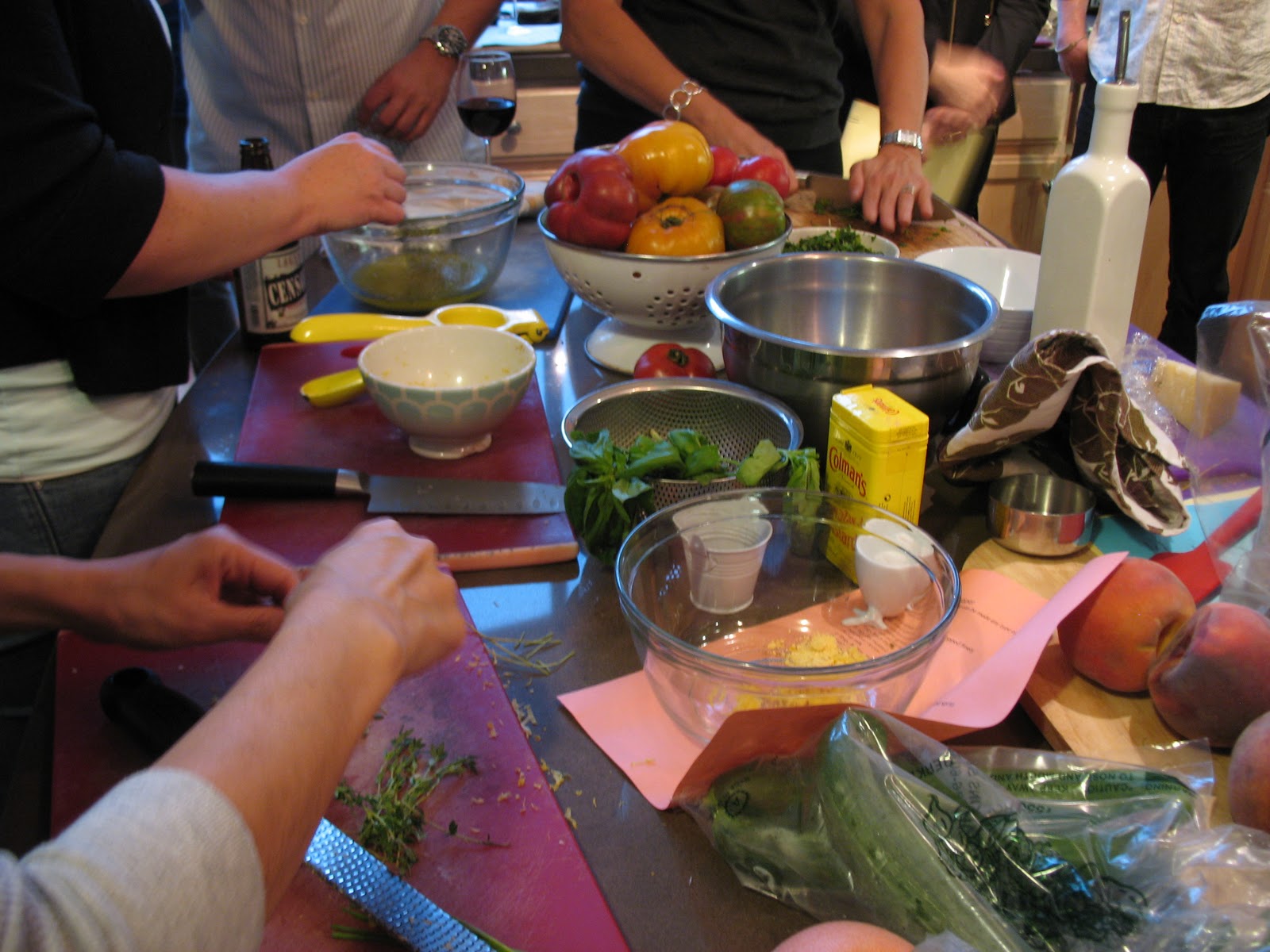
But I think the highlight for me was a three-hour period. An evening cooking class that Raymond surprised me with for my birthday in San Francisco. (When did he get so smart?)
What an amazing evening if you are an addicted foodie and cookbook collector. (Cough, cough. Me?)
Our lively and talented instructor, Emily, of first class cooking taught me and my fellow students all kinds of wonderful kitchen tricks, as we prepared a tomato and peach Caprese salad, pistachio crusted snapper, quinoa salad and baked plums with almond macaroons. All in her beautiful apartment with a San Fransisco city view through her glorious floor to ceiling windows. And then we got to sit and share the meal. Heaven, Nirvana, Himmel.
And now we're home again, with the memories and photos to relive the many amazing things we saw and did.
So while I shave the fennel, I think back on my travels and dream of the next ones.
I love the slight licorice flavour of fennel and wanted to amp that up by adding the ground anise and anise seeds to add more layers of flavour. If you don't have both, just use a bit more of whichever one you have, or leave them out altogether. Or replace them with less assertive poppyseeds. Still good.
I often use extra virgin olive oil in salads, however, I like to use neutral-flavoured grapeseed oil in dressings when I want the oil to take a backseat to other flavours, like in this one.
Fennel and Beet Salad
1 medium fennel bulb, about 1 lb (450 gm)
2 medium striped (or regular) beets, about 4 oz. (115gm)
3 green onions (scallions)
Dressing:
2 Tbsp (30ml) freshly squeezed lime juice (1/2 a large juicy lime)
1/4 cup (60ml) grapeseed oil
1/2 (5ml) tsp ground anise seed
1 tsp (5ml) whole anise seeds
1 tsp (5ml) dijon mustard
1/4 tsp (2.5ml) sea salt
1/4 tsp (2.5ml) pepper
Cut the fennel bulb in half, then slice it thinly with a knife, turning the bulb as you slice so that you have relatively even shards.
Cut the tops and roots off the beets and peel any toughened bits from the skin. Slice the beets very thinly on a mandoline, then stack several slices at a time together on a cutting board and slice them into pencil-wide strips. (If you are using regular beets, put the slices into a seive and rinse them well under cold running to remove any of the juices that may stain the fennel. Shake the seive and let them drain until almost dry. This makes the salad look less pink. If you are lucky enough to get a hold of the striped beets you can skip this step.)
Slice the green onions finely. Put the vegetables into a bowl and prepare the dressing.
Lightly crush the fennel seeds in a mortar and pestle to release some of their aromatic oils. Place all the dressing ingredients in a small jar and shake vigorously to combine. (The dressing can be prepared ahead of time to allow the flavours to blend and the fennel seeds to soften a bit, but it is also fine prepared just before serving.
Pour the dressing over the vegetables and toss gently to keep the beets' colour from bleeding.
Garnish with some bits of fennel fronds.
Serves 4 to 6.
Thursday, 18 August 2011
Herb-Stuffed Porkchops
This simple recipe was born one day when I had these lean thick-cut pork loin chops waiting to go on the barbeque and I wanted to keep the centers from drying out.
Hmmm....look in the fridge, look in the garden , the spice cupboard and voila!
Had some lovely gluten-free turkey pepperoni in the fridge and a herb patch just begging to be pillaged, plus my deadly secret spice mix that I now slather on everything (well not ice-cream -- not yet) and whose secret I will reluctantly divulge. Promise to guard it carefully and pretend it is much more complex and exotic than it really is. (It transforms a skillet of simple sauteed onions and chickpeas into an out-of-this world, can't-stop-eating-them experience, but enough of that, this is a pork chop recipe).
I've made these several times, with different combinations of herbs, and found you can't go wrong.
Except if you use too much lovage.
I've learned that with lovage, less is definitely more. It can overpower a dish like its plant can overpower my herb bed. Every year I allow Andreas the pleasure of pretending he is a pirate or Crocodile Dundee type and he gleefully attacks the 6 foot high herb with his machete. The bush is like some alien killer plant and quickly regains another 3 to 4 feet in height before the end of the summer. But I wouldn't do without its pungent celery-flavoured leaves to perfume soups, stews and salads. I just use it sparingly!
Herb-Stuffed Pork Chops
Serves 4
4 thick-cut pork loin chops (about 1-1/2 inches or 3.5 cm thick)
1 cup loosely packed fresh herbs (lovage leaves - no more than a 1/4 of the mix, chives, tarragon, sage leaves, basil, etc.)
2 oz. (60 gm) extra lean turkey pepperoni (2 - 6" sausages) or use chorizo or any other spicy sausage
1 large clove garlic
Super-Secret Spice Mix
1 Tbsp smoked paprika
1 Tbsp garlic powder
1 Tbsp sea salt
With a sharp knife cut a pocket into each pork chop, leaving about a finger-wide frame uncut on three sides.
In a foodprocessor whiz together the herbs, sausage and garlic clove to make a rough and slightly chunky paste. (The sausage really helps to bind it)
With your fingers, stuff about 1/4 of the stuffing into the open side of the pork chop pocket.
Mix the ingredients for the Super-Secret Spice Mix (idiot proof - just stir together in a small bowl - how easy is that?)
Rub this on each side of the pork chops and save the rest of the spice mix to use for other things.
Grill the pork chops until perfectly done. I'll leave that up to you.
I served these to some dear friends we lost touch with and who called us up on their way through our area on their holiday. Grilled stuffed pork chops, cornbread and salad. What a wonderful meal it was. The food was good, the wine was flowing and the company was so great. There is nothing better than the reconnection with special friends. That's what life is all about.
Hmmm....look in the fridge, look in the garden , the spice cupboard and voila!
Had some lovely gluten-free turkey pepperoni in the fridge and a herb patch just begging to be pillaged, plus my deadly secret spice mix that I now slather on everything (well not ice-cream -- not yet) and whose secret I will reluctantly divulge. Promise to guard it carefully and pretend it is much more complex and exotic than it really is. (It transforms a skillet of simple sauteed onions and chickpeas into an out-of-this world, can't-stop-eating-them experience, but enough of that, this is a pork chop recipe).
I've made these several times, with different combinations of herbs, and found you can't go wrong.
Except if you use too much lovage.
I've learned that with lovage, less is definitely more. It can overpower a dish like its plant can overpower my herb bed. Every year I allow Andreas the pleasure of pretending he is a pirate or Crocodile Dundee type and he gleefully attacks the 6 foot high herb with his machete. The bush is like some alien killer plant and quickly regains another 3 to 4 feet in height before the end of the summer. But I wouldn't do without its pungent celery-flavoured leaves to perfume soups, stews and salads. I just use it sparingly!
Herb-Stuffed Pork Chops
Serves 4
4 thick-cut pork loin chops (about 1-1/2 inches or 3.5 cm thick)
1 cup loosely packed fresh herbs (lovage leaves - no more than a 1/4 of the mix, chives, tarragon, sage leaves, basil, etc.)
2 oz. (60 gm) extra lean turkey pepperoni (2 - 6" sausages) or use chorizo or any other spicy sausage
1 large clove garlic
Super-Secret Spice Mix
1 Tbsp smoked paprika
1 Tbsp garlic powder
1 Tbsp sea salt
With a sharp knife cut a pocket into each pork chop, leaving about a finger-wide frame uncut on three sides.
In a foodprocessor whiz together the herbs, sausage and garlic clove to make a rough and slightly chunky paste. (The sausage really helps to bind it)
With your fingers, stuff about 1/4 of the stuffing into the open side of the pork chop pocket.
Mix the ingredients for the Super-Secret Spice Mix (idiot proof - just stir together in a small bowl - how easy is that?)
Rub this on each side of the pork chops and save the rest of the spice mix to use for other things.
Grill the pork chops until perfectly done. I'll leave that up to you.
I served these to some dear friends we lost touch with and who called us up on their way through our area on their holiday. Grilled stuffed pork chops, cornbread and salad. What a wonderful meal it was. The food was good, the wine was flowing and the company was so great. There is nothing better than the reconnection with special friends. That's what life is all about.
Sunday, 14 August 2011
Saskatoons, Saskatoons, Every Which Way
I have been living, breathing, eating saskatoons every which way since I've come back. I think it has been another form of therapy. Picking, cleaning and preserving 133 jars of those unique Northern berries kept my mind and hands so busy I could fall thankfully into bed each night and dream of sweet, purple-hued berries hovering just out of my grasp.
Trying to explain their flavour to anyone who's never tasted them is difficult and elusive. They're sweet, dense, rich, seedy, slightly blueberryish, more almondish, a bit apple-y, dusky and deep. Oh, I don't know . . . you'll just have to try them yourself, if you can get your hands on them.
We used to pick them in the wild as children - pails and pails full of them. Always with an accompanying thrill of slight danger as mom pointed out the seedy piles of saskatoon-tinted bear poop or the large, flattened-grass, nesty areas where a berry-feasting bear had stopped to take a nap. Saskatoon berrying has always been joined in my memory with summer heat, sticky juice-stained fingers, and the grand silence of the prairie sky.
Nothing says summer more.
Now I have my own bushes and don't have to fight the bears for the tasty berries anymore (just my husband and children! And dog - Pippa loves them, too.)
This year I played around with different ways to preserve that purple summer in jars - juice, jelly, syrup, canning them with lemon, preserving them with peaches, and variations of a chutney (which recipe I'm still working on, maybe it'll be perfected next saskatoon season).
| From left to right: sask-peach preserve, canned saskatoons, sask-rhubarb juice, sask-raspberry juice, saskatoon chutney, saskatoon syrup, saskatoon jelly |
Saskatoons aren't very acidic, so I find they work best with some added punch from a tangy flavour-booster. Wow, then they shine! I combined them with rhubarb or raspberries and made them into juice with my steam juicer. Refreshing, and with that deep purple colour, I figure they've got to be high in antioxidants. Bonus.
Saskatoon-Peach Preserve
If you can't get saskatoons, this might work with blueberries, though I imagine it would be a bit more liquidy since blueberries are much more juicy than saskatoons, so you may need to cook it a bit longer to reduce the juices to the right consistency. The orange flower water lends a subtle, complex flavour that I love, however if you can't find any, this preserve is delicious without it, too. Orange flower water and rose water are available at ethnic markets.
5 pounds (2.25 kg) saskatoon berries, picked over, rinsed and drained
12 peaches (about 5 pounds or 2.25 kg)
juice of 2 lemons
1 cup (250ml) honey
2 tsp orange flower water (or rose water - they both taste great, just subtly different)
Dip the peaches in boiling water for 1 to 2 minutes, until the skins loosen. Put into a bowl of cold water to cool, then slip them out of their skins. Cut them into wedges, then slice each wedge into about 4 pieces.
Place the saskatoons, diced peaches and lemon juice into a large heavy-bottomed stock pot. Bring to a boil, stirring occasionally, then turn down the heat to low and add the honey. Simmer the fruit mixture, stirring often, about 15 to 30 minutes, until the desired thickness is reached. You want it to be saucy, not jammy, and the berries still relatively whole, although the peach chunks should be nicely softened and starting to break apart.
Ladle the hot mixture into hot, sterilized jars and seal with hot sterilized lids. (You may process them in a boiling water bath for added insurance against spoilage.) Leave jars on counter to cool.
Alternatively, you can let the mixture cool and ladle it into containers, then freeze it for future use.
Delicious served chilled as a fruit dessert, or over ice-cream, yogurt, pancakes, cheesecake, rice pudding . . . use your imagination.
Canned Saskatoons
For years, growing up, I ate canned saskatoons as a fruit dessert, but I always found the flavour a little bland. This year I experimented with adding lemon, and ba-da-bing, ba-da-boom! The missing link! They now have zing, and my kids can't get enough of them. (It is important to use organic lemons here, as you are using them peel and all, and you don't want to preserve all those toxic chemicals right into the jars.)
saskatoons, picked over, rinsed and drained
organic lemons, sliced
honey
water
Make a simple syrup with the ratio of 1 cup honey to 4 cups water. Bring to a boil and keep hot, You will need about 1 to 1-1/2 cups syrup for each quart of berries. (Save any leftover syrup in the fridge and use it to sweeten summer drinks.)
Into each sterilized quart jar put 2 slices of lemon - lay 1 slice on the bottom of the jar and cover with a handful of saskatoons, then tilt the jar slightly and lay another slice against the side of the jar and fill it to within 3/4 inch of the top with berries, making sure the lemon stays against the outside of the jar. But don't overstress about this - it just looks prettier if you can see the lemon slice from the outside of the jar. If using pints, you only need 1 slice of lemon per jar - put it against the outside of the jar.
Pour over the hot honey syrup to within 1/2 inch of the top of the jars. Close the jars and process in a boiling water bath for 20 minutes (15 minutes for pints).
(Don't tell anyone the lemon slice is the best part, or you'll have to fight them for it!)
Wednesday, 10 August 2011
Naure's Gifts: Fresh Trout, Morels and a side of Bannock
What gifts nature has to offer, if we only stop to look - or listen - or thread a hook.
I've just come back from a week at my parents' cabin in northern British Columbia, on the shores of the shockingly cold and pristinely clear Francois Lake. It was a time to regroup with family and reconnect with nature. To have lovely saunas and run squealing into the lake. To pick teeny-tiny wild strawberries. To throw sticks for the dogs and build campfires. To swat mosquitoes and clean up sheds.
Every meal was a feast and some were more feasty than others. But the best ones were those using nature's gifts.
Between my sisters and I we had six children at the cabin between the ages of 12 and 15, so we had a constant supply of willing fishermen to head out in the canoe and sturdy old fishing boat. They came back proudly with their daily catch of fresh rainbow trout and even a few elusive Arctic Char.
Those we rolled in cornmeal and pan-fried, sometimes only moments after they'd been pulled from the sparkling waters. A fried taste of heaven.
Other days we were lucky enough to feast on campfire-roasted venison. Provided by my sister and husband, cut into rough chunks, marinated in wine and spices, then speared onto sharpened willow sticks and roasted to perfection over glowing campfire coals - crisp and browned on the outside, pink and meltingly tender on the inside.
Followed by a toasty spiral of bannock roasted on those same sticks and filled with drippy, oozing maple syrup to lick off fingers and lips.
But Nature outdid herself when she offered up for us to share - her abundant crop of wild forest morel mushrooms. These were thanks to the devastating forest fires that spread through this area last year. Every cloud has a silver lining, and we were really thankful for these. They grow best in burned out areas, so we reaped the benefits this year. A whole pailful of these funny, wrinkly-looking little forest caps. Tasting of the earth and the woods.
Slathered with just enough of a cream cheese and white wine sauce to enhance but not overpower their delicate flavour.
And served over wonderfully dense and chewy biscuit/pancakes made from the leftover bannock dough patiently fried by Hannah, my 12 year old niece.
Another kind of heaven.
Morels in Wine Sauce
This is more a method than a real recipe. It all depends on how many mushrooms you can get your hands on, and what type they are and the mood you're in (I imagine any other variety of mushrooms will do, too. They just won't have quite the same earthy richness) and how big your scoops of cream cheese and your glug of wine are. Proportions aren't really all that important. It tastes good whichever way it turns out - saucier or stewier.
fresh morel mushrooms - enough to feed your crowd (I had about 8 to 10 cups chopped)
1 or 2 large onions - use 2 if you have over 6 - 8 cups of chopped mushrooms
1 Tablespoon butter
2 Large spoonfuls of cream cheese (about 1/4 to 1/2 cup each)
1 large glug of white wine
salt and pepper to taste
Chop the onions.
Melt the butter in a large high-sided skillet over medium heat. Add the onions and saute until translucent.
Meanwhile chop the morels (or other mushrooms) into bite-sized chunks. Leave small ones whole. (Don't wash the mushrooms, just wipe off any bits of forest still stuck to them.)
Add the mushrooms to the onions and saute, stirring occasionally, until the mushrooms have released all of their juices,about 10 minutes. If they are fresh you will have quite a bit of flavourful mushroom liquid.
Dig two large spoonfuls of creamcheese out of your container and glop them into the mushroom mixture. If you have a block of creamcheese, cut off 2 corresponding-sized chunks.
Stir gently until the creamcheese has melted, then pour in a generous glug of white wine.
Season to taste with salt and pepper and let simmer a few more minutes until the consistency of the sauce is to your liking.
Serve over the bannock recipe that follows, or over rice, or pasta, or even toast. Or just eat it from the pan with a spoon and smack your lips often. Wash down with the rest of the white wine (well at least share the bottle with someone else).
Bannock
We always make a big batch of this dough when we are at the cabin. We pinch off a bun-sized piece and roll it between our hands to make a long rope, then spiral it around clean de-barked sticks and roast it slowly over the fire. Nice hot coals work the best. And be patient. They take a while to roast, but when you are in good company, what does time matter?
When done, pull the baked bannock carefully off the stick, drizzle the inside with maple syrup or jam, and lick greedily off your fingers while you devour the whole thing. I dare you to wait long enough to let it cool so you don't burn your mouth.
Another way to do them, is to roast a sausage til crackling and bursting with juices, then wrap it with the spiral of bannock dough and roast it again til the dough is golden brown and puffy. A perfect campfire pig-in-a-blanket, well worth the wait.
3 cups flour
3 Tbsp baking powder
1 tsp salt
2 Tbsp melted butter
1 1/2 cups water
Mix dry ingredients in a large bowl. Make a well in the center and pour in the melted butter and the water.
Mix with a spoon until that doesn't work any more, then go in with your hands and work the mixture into a ball. Turn it out onto a lightly-floured surface and knead it until it makes a nice elastic ball. This is different from normal biscuit dough, which needs a very light touch. You don't have to worry about overworking the dough. What you're after is actually a dense and chewy dough.
It is now ready to roast over the fire, or roll it into egg-sized balls, pull them flat to make little pancakes and fry them in a mixture of butter and oil in a preheated heavy pan. When they are golden brown on each side, they are ready to serve topped with the morel mushroom sauce. Or you can just sprinkle them with sugar and eat them standing at the stove. Or do both.
This dough keeps, covered, in the fridge for 3 to 4 days, so make a large batch and it's always ready for your gourmet camping cravings.
Morels in Wine Sauce
This is more a method than a real recipe. It all depends on how many mushrooms you can get your hands on, and what type they are and the mood you're in (I imagine any other variety of mushrooms will do, too. They just won't have quite the same earthy richness) and how big your scoops of cream cheese and your glug of wine are. Proportions aren't really all that important. It tastes good whichever way it turns out - saucier or stewier.
fresh morel mushrooms - enough to feed your crowd (I had about 8 to 10 cups chopped)
1 or 2 large onions - use 2 if you have over 6 - 8 cups of chopped mushrooms
1 Tablespoon butter
2 Large spoonfuls of cream cheese (about 1/4 to 1/2 cup each)
1 large glug of white wine
salt and pepper to taste
Chop the onions.
Melt the butter in a large high-sided skillet over medium heat. Add the onions and saute until translucent.
Meanwhile chop the morels (or other mushrooms) into bite-sized chunks. Leave small ones whole. (Don't wash the mushrooms, just wipe off any bits of forest still stuck to them.)
Add the mushrooms to the onions and saute, stirring occasionally, until the mushrooms have released all of their juices,about 10 minutes. If they are fresh you will have quite a bit of flavourful mushroom liquid.
Dig two large spoonfuls of creamcheese out of your container and glop them into the mushroom mixture. If you have a block of creamcheese, cut off 2 corresponding-sized chunks.
Stir gently until the creamcheese has melted, then pour in a generous glug of white wine.
Season to taste with salt and pepper and let simmer a few more minutes until the consistency of the sauce is to your liking.
Serve over the bannock recipe that follows, or over rice, or pasta, or even toast. Or just eat it from the pan with a spoon and smack your lips often. Wash down with the rest of the white wine (well at least share the bottle with someone else).
Bannock
We always make a big batch of this dough when we are at the cabin. We pinch off a bun-sized piece and roll it between our hands to make a long rope, then spiral it around clean de-barked sticks and roast it slowly over the fire. Nice hot coals work the best. And be patient. They take a while to roast, but when you are in good company, what does time matter?
When done, pull the baked bannock carefully off the stick, drizzle the inside with maple syrup or jam, and lick greedily off your fingers while you devour the whole thing. I dare you to wait long enough to let it cool so you don't burn your mouth.
Another way to do them, is to roast a sausage til crackling and bursting with juices, then wrap it with the spiral of bannock dough and roast it again til the dough is golden brown and puffy. A perfect campfire pig-in-a-blanket, well worth the wait.
3 cups flour
3 Tbsp baking powder
1 tsp salt
2 Tbsp melted butter
1 1/2 cups water
Mix dry ingredients in a large bowl. Make a well in the center and pour in the melted butter and the water.
Mix with a spoon until that doesn't work any more, then go in with your hands and work the mixture into a ball. Turn it out onto a lightly-floured surface and knead it until it makes a nice elastic ball. This is different from normal biscuit dough, which needs a very light touch. You don't have to worry about overworking the dough. What you're after is actually a dense and chewy dough.
It is now ready to roast over the fire, or roll it into egg-sized balls, pull them flat to make little pancakes and fry them in a mixture of butter and oil in a preheated heavy pan. When they are golden brown on each side, they are ready to serve topped with the morel mushroom sauce. Or you can just sprinkle them with sugar and eat them standing at the stove. Or do both.
This dough keeps, covered, in the fridge for 3 to 4 days, so make a large batch and it's always ready for your gourmet camping cravings.
Subscribe to:
Posts (Atom)